Martial Arts NYC Adults: Start Training at Any Age | Genyukan

Martial Arts NYC Adults: How to Start Training at Any Age
You’ve probably thought about it more than once. Maybe you watched a class through a window, saw a sword demonstration online, or just wanted exercise that doesn’t feel like a treadmill. Then the doubts arrived: Am I too old? Too out of shape? Will I be the only beginner?
The short answer is that adults can start martial arts at almost any age, and most dojos expect beginners to walk in with no experience. The real question is not whether you can begin, but how to choose a style and a school that fit your goals, schedule, and temperament.
This guide to martial arts NYC adults can use covers what to consider before your first class, how traditional arts like Shotokan karate and iaido differ from fitness-style programs, what a first lesson looks like, and the mistakes that cause new students to quit early. It draws on how traditional dojos operate, including Genyukan Dojo in Rego Park, Queens, which teaches Shotokan karate-do and Ryushin Shouchi Ryu iaido to adults and children.
Why Martial Arts NYC Adults Start Training, and Why It’s Not Too Late
Common Reasons Adults Begin
Adults rarely walk into a dojo for just one reason. The most common motivations are:
- Movement with structure. Many people want exercise that has a skill to learn, not just reps to count.
- Stress relief. Focusing on stance, breathing, and form leaves little room to think about your inbox.
- Confidence and self-defense awareness. Training teaches posture, distance, and composure, which matter as much as any technique.
- A new community. In a city as large as New York, a dojo can become a small, steady social circle.
- Curiosity about Japanese culture and history, especially for sword arts.
Is There an Age Limit?
Traditional Japanese martial arts, known as budo, were designed as lifelong practices. Classes are paced around technique and repetition rather than raw athleticism, and intensity can be adjusted to the individual. Genyukan Dojo states that its Shotokan karate and iaido classes are practiced by women and men of all ages and abilities.
Health Precautions Before You Start
“Any age” does not mean “any condition without precautions.” If you’re returning to exercise after a long break, have a joint, heart, or back concern, or are pregnant, speak with your doctor before your first class. Tell your instructor about any limitations so they can guide your pace.
Choosing the Right Style: Karate, Iaido, and Other Options
Searching for martial arts in New York turns up a wide range: Brazilian jiu-jitsu, Muay Thai, boxing, MMA, taekwondo, judo, Krav Maga, kung fu, and more. None is “best” in the abstract. The better question is what you want from training.
Shotokan Karate: Structured Fundamentals
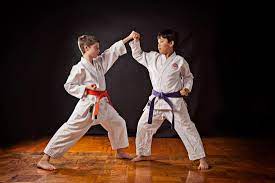
Shotokan karate suits you if you want a full-body, structured workout with striking skills. It builds fundamentals through kihon (basics), kata (forms), and kumite (partner practice), usually in progressive steps. You develop stance, balance, coordination, and discipline together.
Iaido: Precision and Calm
Iaido suits you if you want a quieter, more precise practice. It is the Japanese art of drawing the sword, cutting, and returning it to the scabbard in one controlled sequence. It is practiced mostly solo through kata and involves no sparring.
Grappling and Fitness-Based Options
If you want live sparring or ground work, look at jiu-jitsu, judo, or wrestling-based gyms. If you want high-energy conditioning, boxing and kickboxing programs often emphasize pad work and cardio.
Quick Comparison
| Your priority | Worth exploring |
|---|---|
| Structured fundamentals and discipline | Shotokan karate |
| Mindfulness, precision, Japanese tradition | Iaido |
| Live resistance and ground work | Jiu-jitsu or judo |
| High-energy conditioning | Boxing or kickboxing |
You don’t have to choose forever. Many people try one art, then add another once they feel settled. At Genyukan, students can explore both karate and iaido under one roof.
Iaido Classes Near Me: What Iaido Actually Is
Iaido is one of the less common martial arts in NYC, so it’s worth explaining. If you’ve typed “iaido classes near me” into a search bar, you may have only a vague picture of what happens in a class.
How Iaido Works
Iaido (居合道) is a Japanese sword art centered on the moment of drawing the blade. Practice is done in kata, which are prearranged solo forms. Each kata includes the draw, a cut, a cleaning motion, and a return to the scabbard, performed with attention to posture, distance, and intent. The movements take time to master, so there is no rush, and no one is trying to hit you.
The Ryushin Shouchi Ryu Tradition
Genyukan Dojo teaches Ryushin Shouchi Ryu, a school of kobudo (classical martial arts) specializing in iaijutsu and iaido. According to the dojo’s own history of iaido, the school preserves more than 60 kata, and its philosophy follows the broader budo ideal: refining the self through demanding but patient training rather than defeating an opponent. The name Ryushin can be understood as “the heart of the willow,” an image of strength combined with flexibility.
What Beginners Should Know
- You won’t start with a live blade. Beginners practice basics such as stance, grip, and drawing mechanics first. Ask any dojo what equipment it provides or recommends before buying anything.
- Etiquette matters. Bowing, handling the sword respectfully, and following safety rules are part of the practice.
- It rewards patience. Progress is measured in subtle details such as the line of a cut or the steadiness of your posture.
- It suits many body types. Because it is a controlled solo form, the pace can be adapted to different levels of fitness and mobility.
What to Ask Any Iaido School
When you look for iaido in the New York area, check that the instructor can clearly explain their lineage, how beginners are introduced to equipment, and how safety is handled. Those answers tell you a lot about a school.
How to Choose Among Martial Arts Schools in New York City
New York has an enormous number of dojos, academies, and gyms. Reading a list is not the same as choosing one. Here is a practical filter for martial arts schools in New York City.
1. Prioritize Location and Schedule
The best school is the one you can reach consistently. If you live or work in Queens, searching for martial arts classes near Rego Park may serve you better than commuting across boroughs. Rego Park is served by the Queens Boulevard subway corridor, and local bus routes connect nearby neighborhoods such as Forest Hills, Elmhurst, Middle Village, and Kew Gardens. Check the MTA trip planner for your own route and travel time.
2. Observe a Class or Take a Trial
Watching tells you more than any website. Look at how the instructor corrects students, whether beginners are treated patiently, and whether the room feels safe and orderly. Genyukan’s website currently advertises a free trial week and uniform and invites newcomers to watch a class. Confirm current offers directly with the dojo, since promotions can change.
3. Ask About the Instructor’s Background
Qualified, experienced teachers matter more than flashy facilities. Genyukan is led by Roman Pinkhasov Sensei as dojo-cho (chief instructor). Ask any school how long its instructors have trained, with whom, and how they teach beginners.
4. Check How Adults Are Integrated
Some schools run mixed-age classes; others have dedicated adult sessions. Neither is automatically better, but you should know which you’re joining.
5. Understand Pricing and Commitment
Ask about monthly rates, registration or uniform fees, contract terms, and cancellation policies. Genyukan’s site lists an introductory monthly rate and a bring-a-friend discount at the time of writing, but always confirm current pricing directly.
6. Look for a Culture That Fits
A traditional dojo emphasizes etiquette, respect, and gradual progress. A fitness-oriented gym emphasizes intensity and variety. Either can be right; just choose deliberately.
What to Expect in Your First Class
Fear of the unknown stops more adults than any physical limitation. A typical beginner experience in a traditional dojo looks like this.
Before Class
Arrive 10 to 15 minutes early. Wear comfortable, loose clothing if you don’t yet have a uniform. Remove your shoes at the entrance, as is standard in dojos. Introduce yourself to the instructor and mention any injuries or concerns.
The Bow and Warm-Up
You’ll see students bowing when entering or leaving the training space and at the start and end of class. It’s a gesture of respect, and no one expects you to know the details on day one. Warm-up usually follows, with light movement, stretching, and joint mobilization.
Technique and Repetition
Beginners are generally taught a small set of movements and asked to repeat them. In karate classes this often means stances, punches, kicks, and blocks practiced in lines. The repetition is where the learning happens.
Cool-Down and Closing
Classes usually end with a short cool-down and a final bow.
What It Won’t Be
It won’t be a test of your athleticism, a sparring match on day one, or an environment where you’re expected to keep up with advanced students. Reputable instructors understand that everyone starts somewhere. For more on customs, read the dojo’s etiquette guide and glossary before you go.
Practical Tips and Common Mistakes for Adult Beginners
Tips for Your First Three Months
- Aim for consistency over intensity. Two classes a week, attended reliably, will do more for you than one heroic session followed by two weeks off.
- Set a process goal. “Attend twice a week for 12 weeks” is easier to hold onto than “get a black belt.”
- Learn the basic vocabulary. Sensei (teacher), dojo (training hall), kata (form), rei (bow).
- Take brief notes after class. Even three lines about what you learned helps retention.
- Protect your body. Warm up properly, hydrate, and stop if something hurts in a sharp or unusual way. Tell the instructor.
- Practice small amounts at home. Five minutes of stance or posture work between classes helps more than you might expect.
- Ask questions. Good instructors and senior students welcome them.
- Be patient with your ego. In traditional arts you’ll often be a beginner among seasoned practitioners. That’s normal, and it’s part of the lesson.
Common Mistakes to Avoid
- Choosing a school by price or proximity alone. Convenience matters, but teaching quality and atmosphere matter more. Visit before you commit.
- Expecting fast results. If you judge progress week to week, you may miss improvements in balance, coordination, and composure that build gradually.
- Overtraining early. Enthusiasm in month one often leads to sore joints and burnout in month two.
- Comparing yourself to others. The student next to you may have trained for years. Measure yourself against your own first class.
- Skipping the basics. Strong fundamentals are what make advanced techniques possible.
- Hiding injuries or health conditions. Your instructor can only adapt training if they know what you’re dealing with.
- Buying expensive equipment too early. Especially with iaido, ask the instructor what to buy and when.
- Treating the first few weeks as a test you can fail. The dojo is a place to practice. If it doesn’t suit you, you can try another style or school.
Frequently Asked Questions
Is it too late to start martial arts as an adult?
No. Many dojos welcome adult beginners of all ages, and traditional arts are designed around long-term development. Check with your doctor first if you have health concerns, and tell your instructor about any limitations.
Do I need to be fit before joining?
No. Training itself builds conditioning, and a good instructor will let you work at your own pace.
What’s the difference between karate and iaido?
Karate is an empty-hand art focused on striking, blocking, stances, and forms. Iaido is a sword art focused on drawing, cutting, and re-sheathing in controlled solo kata. Karate is typically more physically dynamic, while iaido is more meditative and precise.
Will I have to spar?
Not on your first day. Sparring policies vary by art and school, and iaido does not involve sparring at all. Ask about it during your trial.
How often should a beginner train?
Many instructors suggest two classes per week as a sustainable starting point. Consistency matters more than frequency.
What should I wear to my first class?
Comfortable, loose clothing that lets you move. Many schools provide or sell uniforms later. Genyukan’s website mentions a free uniform with its trial offer, so confirm this when you contact the dojo.
Where can I find martial arts classes near Rego Park?
Genyukan Dojo is located at 63-44 Saunders St, Rego Park, NY 11374, and teaches Shotokan karate-do and Ryushin Shouchi Ryu iaido. Call 347-642-3447 or use the contact page to ask about the current class schedule.
How do I know if a dojo is legitimate?
Ask about the instructor’s training lineage, how long they’ve taught, how safety is managed, and whether you can observe or try a class. Transparent answers are a good sign.
Start Where You Are: Martial Arts NYC Adults Can Begin Today
The best thing about martial arts NYC adults can access today is that the entry point is low and the ceiling is high. You don’t need a sports background, a particular body type, or any prior experience. You need curiosity, a willingness to repeat the basics, and a school that treats beginners with respect.
If you live or work near Queens, a dojo within easy reach helps you build the one habit that matters most: showing up regularly. Whether you’re drawn to the dynamic fundamentals of Shotokan karate or the focused calm of iaido, the best next step is simple. Visit a class, ask your questions, and see how it feels.
Ready to try? Call Genyukan Dojo at 347-642-3447 or book an appointment to ask about the current schedule, trial options, and which program suits you. Genyukan is at 63-44 Saunders St, Rego Park, NY 11374.


Comments
Post a Comment