Aikido Classes NYC: What Tsukimi Teaches About Stillness

There is something quietly powerful about looking at the moon.
In Japan, the tradition of Tsukimi, or moon viewing, is a time to pause, appreciate the beauty of the autumn moon, and simply be present. There is no need to rush toward a goal or fill every moment with activity. You look, breathe, notice, and allow the moment to unfold.
That idea of stillness has an interesting connection to martial arts.
When people first think about martial arts, they often imagine speed, powerful strikes, intense workouts, and competition. But many traditional martial arts teach something deeper: how to remain calm when everything around you is moving.
This is one reason students exploring Aikido Classes NYC may discover that their training is about much more than physical technique. Aikido emphasizes balance, awareness, movement, timing, and the ability to respond without unnecessary force.
The same qualities can be found in other Japanese martial arts, including Iaido and Shotokan Karate.
Whether you are interested in martial arts for fitness, discipline, self-development, or cultural exploration, the practice can offer an opportunity to slow down and become more aware of yourself.
Tsukimi reminds us that stillness does not mean doing nothing. Sometimes, stillness is what allows us to see clearly before we move.
What Is Tsukimi and Why Does Stillness Matter?
Tsukimi is a Japanese tradition associated with appreciating the full moon, particularly the autumn moon. Families and communities may gather, enjoy seasonal foods, decorate with traditional plants, and spend time appreciating the moon.
At its heart, the practice encourages observation.
You don't need to change the moon. You don't need to make it move faster. You simply observe it.
That mindset has a surprising relationship with martial arts training.
A beginner may initially focus on learning techniques correctly. Where should the hands go? How should the feet move? How much power should be used?
Over time, however, good training becomes less about memorizing movements and more about awareness.
You begin to notice your posture.
You notice your breathing.
You notice tension in your shoulders.
You notice when you are rushing.
You notice how another person's movement affects your own balance.
This awareness is particularly relevant to Aikido, where timing, positioning, balance, and controlled movement are central parts of practice.
In a busy city such as New York, creating even a small amount of intentional stillness can feel surprisingly valuable.
Aikido Classes NYC: Learning to Move From Stillness
For people searching for Aikido Classes NYC, one of the most interesting aspects of training is the relationship between stillness and movement.
Aikido is not simply about standing still. Instead, stillness can create the awareness necessary for effective movement.
Before responding to an attack or training partner, a practitioner needs to understand what is happening.
Where is the person's center of balance?
What direction is the movement going?
How much force is being used?
Where should you position yourself?
The answer is not always to meet force with greater force.
Aikido training often explores ways of blending with movement, maintaining balance, and redirecting energy through controlled techniques.
This creates a useful lesson outside the dojo as well.
When something unexpected happens in everyday life, our first reaction may be to respond immediately. We become frustrated, defensive, or anxious.
A moment of stillness can change that response.
Instead of reacting automatically, we can pause.
We can breathe.
We can observe.
Then we can decide how to move.
That is one of the deeper ideas that connects the philosophy of Tsukimi with martial arts practice.
Stillness creates space for awareness.
Awareness creates better decisions.
And better decisions can lead to more controlled movement.
What Iaido Can Teach Us About Presence
If Aikido focuses your attention on movement and balance, Iaido offers another perspective on stillness.
People searching for Iaido Classes Near Me are often interested in the traditional Japanese art of drawing and using the sword in a controlled, deliberate manner.
Iaido training is known for its emphasis on precision, posture, concentration, and disciplined movement.
There is a strong relationship between preparation and action.
A practitioner doesn't simply rush through a sequence. Each movement has a purpose.
The transition from stillness into movement is deliberate.
That can make Iaido fascinating even for people who have never trained with a sword.
The lesson isn't necessarily about the weapon. It is about attention.
When your mind is distracted, even a simple movement becomes difficult to perform correctly.
When your breathing, posture, eyes, hands, and awareness work together, movement becomes more controlled.
This principle applies to many areas of life.
Whether you are studying, working, exercising, or communicating with someone, being fully present can improve the quality of what you do.
Tsukimi provides a quiet example of the same idea.
You don't have to constantly do something to make a moment meaningful.
Sometimes paying attention is the practice.
The Connection With Shotokan Karate New York City
Aikido and Iaido are not the only Japanese martial arts where discipline and awareness play important roles.
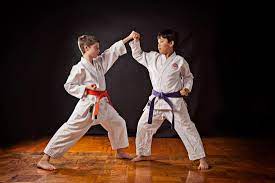
Students looking for Shotokan Karate New York City programs may encounter a training environment that emphasizes fundamentals, repetition, posture, technique, and controlled movement.
Shotokan Karate is often associated with strong basics and disciplined practice.
A beginner may repeat the same stance, punch, block, or kata many times.
At first, repetition can feel simple.
Eventually, however, repetition becomes a way of developing awareness.
Is your stance stable?
Are your shoulders relaxed?
Is your breathing controlled?
Are you moving with unnecessary tension?
Are you rushing the technique?
These small details can become increasingly important.
This is where the concept of stillness becomes relevant again.
Good martial arts movement doesn't necessarily come from constant speed. It can come from knowing when to move and when not to move.
A karate practitioner may develop the ability to remain composed before executing a technique.
An Aikido practitioner may learn to maintain balance while responding to movement.
An Iaido practitioner may focus on precise transitions between stillness and action.
The methods are different, but the broader lesson of awareness can overlap.
Martial Arts Schools in New York City Offer More Than Physical Training
For someone exploring Martial Arts Schools in New York City, choosing a school is not only about finding a convenient location.
The training environment matters.
Different schools can have different approaches to instruction, etiquette, intensity, class structure, and martial arts traditions.
Some students want a challenging physical workout.
Others are interested in traditional Japanese culture.
Some want to develop coordination and confidence.
Others enjoy the discipline and structure of regular practice.
Before joining a program, it can help to think about what you actually want from martial arts.
Ask yourself:
Am I looking for fitness?
Do I want traditional martial arts training?
Am I interested in Japanese culture?
Do I prefer partner-based practice?
Would I enjoy learning forms or kata?
Am I looking for a calm and disciplined environment?
How much time can I realistically dedicate to training?
Visiting a school and observing a class can also be useful.
Pay attention to how instructors communicate with students.
Notice whether beginners receive clear guidance.
Look at how students treat one another.
A good training environment should make expectations understandable and give students room to learn progressively.
The goal isn't simply to find a class.
It is to find a training practice you can realistically continue.
Practical Ways to Bring the Tsukimi Mindset Into Training
You don't need to wait for a full moon to practice stillness.
Here are several simple ways to bring the idea into your martial arts routine.
1. Arrive a Few Minutes Early
Instead of rushing into class at the last second, arrive a little early.
Use those minutes to put away distractions, organize your equipment, and mentally prepare.
2. Pay Attention to Your Breathing
When training becomes difficult, beginners sometimes hold their breath or tense their shoulders.
Take a moment to notice your breathing.
Controlled breathing can help you remain aware of your body during practice.
3. Slow Down Your Basics
If you are learning a new technique, speed isn't always the priority.
Perform the movement slowly enough to understand what your body is doing.
Once the mechanics become familiar, speed can develop naturally.
4. Observe Before Reacting
During partner practice, don't immediately think about your next technique.
First observe what your partner is doing.
Where are they moving?
How is their balance changing?
What does their body position tell you?
5. Leave Your Phone Alone
Modern life constantly demands attention.
A martial arts class can become valuable precisely because it gives you an opportunity to disconnect.
For that period, let the phone remain in your bag.
6. Reflect After Class
Spend a minute or two after training thinking about what you learned.
You don't need a complicated journal.
Simply ask:
What did I notice today that I didn't notice before?
That question can gradually change how you approach practice.
Common Mistakes Beginners Make
Starting martial arts can be exciting, but beginners sometimes make the process harder than necessary.
Trying to Learn Everything Immediately
Martial arts contain years of material.
You don't need to master everything during your first month.
Focus on the fundamentals your instructor gives you.
Using Too Much Force
New students sometimes believe stronger movement automatically means better technique.
In many traditional martial arts, excessive tension can actually make movement less efficient.
Learn control before chasing power.
Comparing Yourself With Advanced Students
Someone who has trained for five years will naturally look different from someone attending their first class.
Compare your current ability with your previous ability.
Progress is personal.
Ignoring Etiquette
Traditional martial arts often include specific etiquette and training customs.
Learn them.
They are part of understanding the culture and environment of the dojo.
Training Only When You Feel Motivated
Progress usually comes from consistency rather than occasional bursts of enthusiasm.
A realistic schedule that you can maintain is more useful than an ambitious schedule you quickly abandon.
Forgetting to Enjoy the Process
Martial arts are a long-term practice.
If every class becomes a test of performance, training can become stressful.
Stay curious.
Enjoy learning.
Notice the small improvements.
FAQ About Aikido and Japanese Martial Arts
Is Aikido suitable for beginners?
Yes. Beginners can start Aikido without having previous martial arts experience. Training is generally progressive, allowing students to learn fundamental movements before advancing to more complex techniques.
What should I expect from Aikido Classes NYC?
Classes can vary between schools, but beginners can generally expect instruction in basic movements, posture, balance, falling and rolling skills, partner exercises, and Aikido techniques.
Are Iaido Classes Near Me suitable for someone with no sword experience?
Many Iaido programs are designed to teach beginners progressively. You don't need to arrive with advanced knowledge. The instructor typically introduces fundamental movements and etiquette first.
Is Shotokan Karate New York City training only for competition?
No. Karate training can have different goals depending on the school and student. People may practice for fitness, discipline, traditional martial arts education, personal development, or competition.
How do I choose between different Martial Arts Schools in New York City?
Start by identifying what you want from training. Then compare factors such as location, schedule, teaching approach, martial arts style, beginner programs, class atmosphere, and cost.
Do I need to be physically fit before starting martial arts?
No. Beginners can generally develop fitness through consistent training. However, you should communicate relevant physical limitations to your instructor and progress at an appropriate pace.
Final Thoughts: Finding Stillness Through Aikido Classes NYC
Tsukimi offers a beautiful reminder that not every meaningful experience requires action.
Sometimes we simply need to stop, look upward, and pay attention.
That idea has a natural connection to martial arts.
Through Aikido Classes NYC, students can explore the relationship between stillness, awareness, balance, and movement. Through Iaido, practitioners can study precision and presence. Through Shotokan Karate, students can develop discipline through repetition and fundamentals.
These practices are different, but each can encourage a person to become more attentive to the present moment.
In a city that rarely seems to stop moving, that can be a valuable lesson.
You don't always need to move faster.
Sometimes, the most important step is learning how to pause.
And perhaps that is what Tsukimi and martial arts have quietly been teaching all along: before you move with purpose, learn to be fully present where you are.
Whether you're researching Aikido Classes NYC, looking for Iaido Classes Near Me, exploring Shotokan Karate New York City, or comparing Martial Arts Schools in New York City, start with curiosity.
Watch.
Listen.
Breathe.
Then take your first step.


Comments