Shotokan Karate New York City: 7 Beginner Tips

If Karate Kid: Legends has made you curious about karate, you are certainly not alone. Movies and television have introduced generations of people to martial arts, but the real experience inside a dojo is very different from what appears on screen.
For people searching for Shotokan Karate New York City, that difference can be especially interesting. Real Shotokan Karate training is built around discipline, repetition, technique, physical conditioning, and mental focus. Students do not become skilled after learning a few dramatic moves. Progress comes from practicing fundamentals consistently and learning how to control movement with precision.
New York City is home to a diverse martial arts community, giving beginners plenty of opportunities to explore traditional karate. Whether someone is researching Shotokan Karate New York, looking specifically for Shotokan Karate Queens NY, or simply comparing Martial Arts Schools in New York City, understanding what happens during actual training can make choosing a dojo much easier.
What Is Shotokan Karate?
Shotokan is one of the major traditional styles of Japanese karate. It is associated with Gichin Funakoshi, whose teaching played a major role in introducing karate from Okinawa to mainland Japan.
Shotokan training is known for its emphasis on fundamental techniques, formal exercises, controlled movement, and disciplined practice. Students commonly work on three broad areas of training: kihon (basics), kata (formal sequences), and kumite (partner practice).
The balance between these areas can vary depending on the dojo and instructor.
A typical class may include warm-ups, basic punches and kicks, stance work, combinations, kata practice, partner exercises, and conditioning. Beginners generally spend considerable time learning how to stand, move, block, punch, and kick correctly before progressing to more advanced techniques.
That emphasis on fundamentals is one of the defining features of traditional karate.
For someone searching for Shotokan Karate New York City, it is worth remembering that different schools can have different teaching philosophies. Visiting a dojo and asking about its curriculum can help you determine whether the training matches your goals.
What Real Shotokan Karate Training Looks Like in NYC
A movie may show a dramatic tournament, a difficult training challenge, or a spectacular technique. A real Shotokan class usually looks much more structured.
Students enter the dojo, prepare for training, and follow the instructor's direction. Classes often begin with warm-ups and movement exercises before progressing into technical practice.
A beginner might spend an entire class working on something that appears simple, such as maintaining a proper stance while performing a basic punch.
That repetition serves an important purpose.
Martial arts techniques depend on coordination. Students need to learn how their feet, hips, torso, arms, and breathing work together. Repeating fundamentals helps develop consistency and body awareness.
Kata introduces another dimension. Students perform predetermined sequences of karate movements while concentrating on posture, timing, direction, balance, and technique.
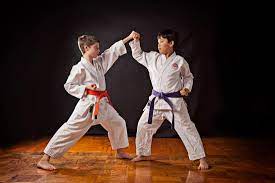
Kumite provides opportunities to apply techniques with a partner under controlled training conditions. The exact format depends on the instructor, student level, and dojo rules.
The goal is not simply to hit harder.
Good training emphasizes control, awareness, respect, and appropriate technique.
This is one of the biggest differences between movie karate and authentic martial arts education.
Shotokan Karate New York: What Beginners Should Expect
If you are considering Shotokan Karate New York, your first class may feel unfamiliar. That is completely normal.
You may hear Japanese terminology that you have never encountered before. The instructor may ask students to move in specific directions, change stances, perform combinations, or repeat a technique several times.
Do not worry about remembering everything immediately.
A good instructor understands that beginners need time to learn.
Your first few classes will probably focus heavily on fundamentals. You may practice basic stances, punches, blocks, kicks, footwork, and simple combinations. Depending on the dojo, you may also begin learning a basic kata.
Physical conditioning can be part of the experience as well. Karate training can involve repeated movement, balance exercises, flexibility work, and other forms of conditioning.
However, you should not feel pressured to perform beyond your current ability.
If you are new to martial arts, communicate with the instructor about your experience level. A reputable dojo should be able to explain how beginners are introduced to training safely and progressively.
The most important thing during your first classes is to listen, observe, and learn.
Shotokan Karate Queens NY: Finding the Right Dojo
People searching specifically for Shotokan Karate Queens NY have an advantage because Queens has a wide range of communities and activities. But choosing a dojo should involve more than finding the closest location.
Start by researching the instructor.
Look for information about the instructor's training background, teaching experience, martial arts organization, and approach to beginners. If the website provides very little information, consider contacting the school with specific questions.
Next, look at the class structure.
Does the dojo offer beginner classes? Are children and adults taught separately? How often are classes held? Does the school provide opportunities for students to progress through different levels?
The atmosphere also matters.
If possible, observe a class before enrolling. Pay attention to how instructors communicate with students and how students interact with one another.
A traditional martial arts school should have a respectful and organized environment.
You should also consider practical factors such as location, schedule, class size, fees, uniforms, and equipment requirements.
The best dojo is not necessarily the one with the most impressive advertising. It is the one where the instruction, environment, schedule, and training philosophy make sense for you.
Shotokan Karate and Other Martial Arts Schools in New York City
New York offers an enormous variety of martial arts, so someone searching for Martial Arts Schools in New York City may encounter many different options.
Shotokan Karate is only one possibility.
Other Japanese martial arts include Judo, Aikido, Kendo, and Iaido. There are also Korean, Chinese, Brazilian, and other martial arts traditions.
Each discipline has different training methods and areas of emphasis.
Shotokan is particularly attractive to people who enjoy structured practice, traditional karate techniques, kata, disciplined movement, and progressive skill development.
Someone primarily interested in grappling might prefer Judo or Brazilian Jiu-Jitsu. Someone fascinated by traditional Japanese swordsmanship might investigate Iaido or Kendo.
There is no universal “best” martial art.
The right choice depends on what you want from training.
If your interest began with Karate Kid: Legends, visiting a Shotokan dojo can be a great way to discover what traditional karate actually involves. You may find that the real experience is less dramatic than a movie but far more rewarding as a long-term practice.
Practical Tips for Your First Shotokan Karate Class
Starting a new martial art can feel intimidating, especially if you have never trained before. A few simple preparations can make the experience much easier.
Arrive Early
Give yourself enough time to find the dojo, change, and speak with the instructor. Arriving early also allows you to observe the environment before class begins.
Wear Appropriate Clothing
Ask the dojo what beginners should wear. Some schools allow comfortable athletic clothing for introductory sessions, while others have specific uniform requirements.
Bring Water
Training can be physically active, so bring water unless the dojo provides it.
Listen Carefully
Karate involves precise instructions. Pay attention when the instructor demonstrates a technique and try to follow the details rather than rushing through the movement.
Ask Questions
If you do not understand a technique or Japanese term, ask politely. Beginners are expected to learn.
Focus on Fundamentals
Do not worry about advanced kicks or complicated combinations. Strong fundamentals create the foundation for future progress.
Be Patient
Your coordination will improve with practice. Give yourself time to become comfortable with the movements.
Common Mistakes Beginners Make
Every beginner makes mistakes, but some can slow progress unnecessarily.
Trying to Look Like a Movie Character
Movies are entertainment. Real martial arts training involves repetition, discipline, and gradual improvement.
Focusing Only on Power
More force does not automatically mean better technique. Proper form, balance, timing, and control are essential.
Comparing Yourself With Experienced Students
Advanced students have often spent years training. Comparing your first month with someone's fifth or tenth year is not useful.
Instead, measure your progress against your own previous performance.
Skipping Basic Training
Beginners sometimes want to learn advanced techniques immediately. However, stances, footwork, basic strikes, blocks, and kata form the foundation of Shotokan.
Training Inconsistently
Attending once every few weeks makes it difficult to build familiarity and coordination. A realistic, consistent schedule is usually more beneficial.
Ignoring Dojo Etiquette
Respect is an important part of traditional martial arts. Follow the dojo's rules, listen to instructors, and treat training partners appropriately.
How Shotokan Karate Can Support Personal Development
Karate training is not only about physical techniques.
The structured nature of Shotokan can encourage qualities such as patience, concentration, discipline, and perseverance.
A student may practice the same technique repeatedly while making small adjustments. Over time, those adjustments can improve coordination and understanding.
Kata can also require considerable mental concentration. Students must remember sequences, directions, stances, timing, and technique.
Partner training introduces another important element: awareness.
You need to pay attention to your partner, maintain appropriate control, and respond to instructions.
These habits can make martial arts training a useful complement to everyday life. Students may become more comfortable with gradual learning and understand that improvement often comes from consistent effort rather than instant results.
That philosophy is very different from the quick transformations often shown in martial arts movies.
Frequently Asked Questions About Shotokan Karate New York City
What is Shotokan Karate?
Shotokan is a traditional style of Japanese karate associated with Gichin Funakoshi. Training commonly includes kihon, kata, and kumite.
Is Shotokan Karate suitable for beginners?
Yes. Beginners can learn Shotokan from the fundamentals. You do not need previous martial arts experience to begin, although individual dojo requirements may differ.
How often should I train?
The ideal frequency depends on your schedule and the dojo's program. Consistent practice is generally more useful than occasional attendance.
Do I need to be physically fit before starting?
No. You can gradually develop fitness, coordination, flexibility, and technique through training. Tell the instructor if you are completely new to martial arts so they can explain how the class works.
How can I find Shotokan Karate New York programs?
Search for local Shotokan dojos, research their instructors and programs, and contact schools about beginner classes. Visiting a class can also help you understand the training environment.
Where can I find Shotokan Karate Queens NY?
If Queens is your preferred location, search specifically for Shotokan programs in Queens and compare their schedules, instructors, class structure, and beginner policies before choosing one.
Is Shotokan Karate the same as other types of karate?
No. Karate includes multiple styles and organizations. Shotokan has its own approach to techniques, kata, training structure, and teaching.
Is real karate like Karate Kid: Legends?
Movies can introduce people to martial arts, but real training is generally much more structured and gradual. Students spend significant time developing fundamentals rather than learning dramatic techniques immediately.
Conclusion
Karate Kid: Legends may inspire people to pick up their first martial arts uniform, but stepping into a real dojo reveals a much deeper experience. For anyone searching for Shotokan Karate New York City, authentic training is built around fundamentals, repetition, discipline, controlled movement, and long-term learning.
Whether you are researching Shotokan Karate New York, specifically looking for Shotokan Karate Queens NY, or comparing different Martial Arts Schools in New York City, take time to understand each school's instructor, training philosophy, schedule, and atmosphere.
You do not need to arrive with tournament experience or perfect fitness. You simply need a willingness to learn and the patience to practice.
The movie may show the exciting moments of karate. The dojo teaches you everything that makes those moments possible.
If you are ready to explore Shotokan Karate New York City, start by visiting a reputable local dojo, asking questions, and experiencing a beginner class for yourself
.jpg)

Comments